
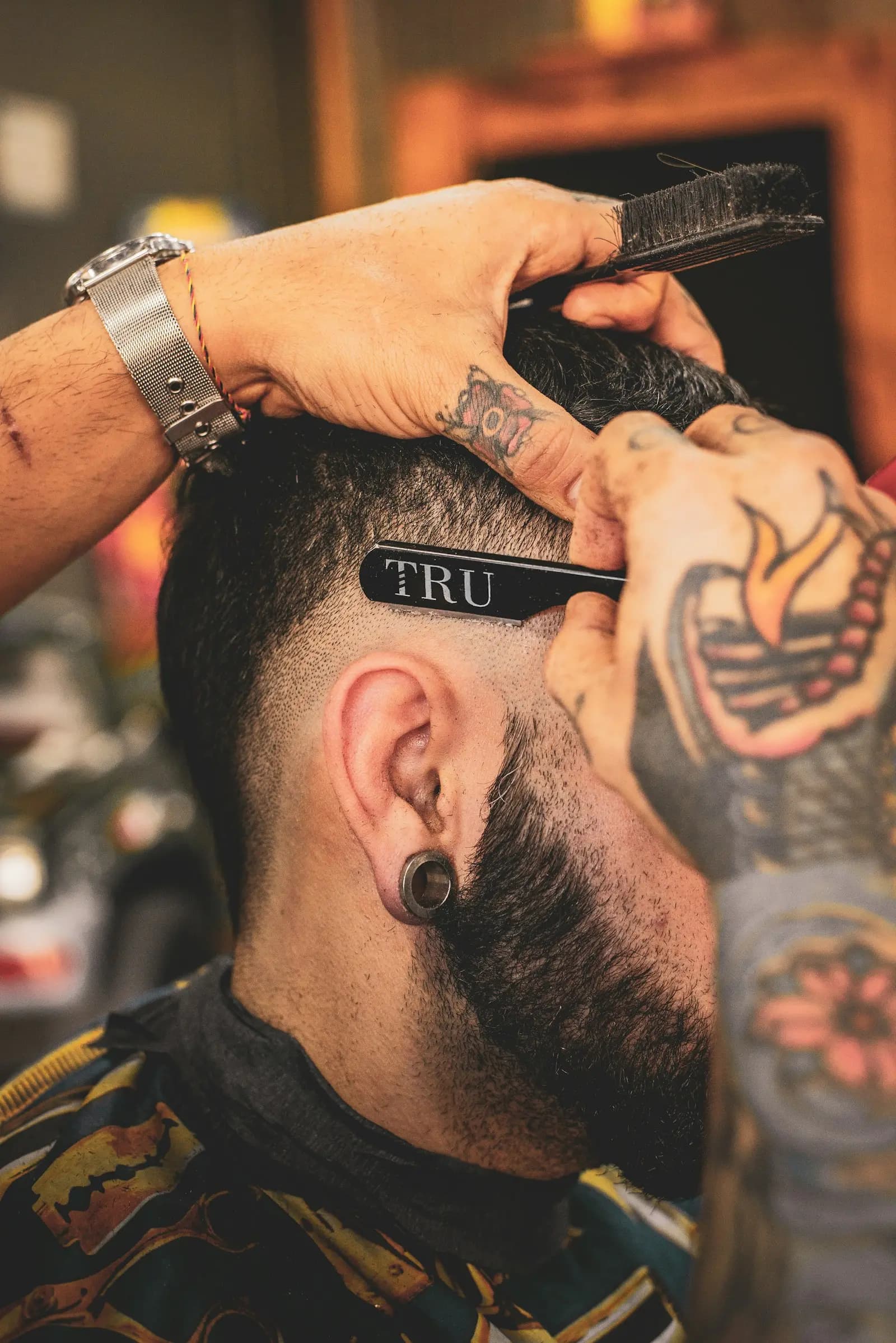


Reserveo did not start in an office. It started on a shop floor, on a Saturday, with a phone buzzing in one pocket and a set of clippers in one hand.
Our founder, Sami Dahhan, spent eight years working as a barber before he ever wrote a product brief. Not eight years adjacent to the trade — eight years in it, taking the bookings, calming the walk-ins, closing the till, and arguing with software that clearly had never met a barbershop.
That is the whole origin of this company: someone who did the job long enough to see the same five problems every single week, and then got tired of working around them.
Eight years behind the chair
Eight years is long enough to stop blaming the day and start noticing the pattern. A bad Saturday once is bad luck. A bad Saturday every week is a system problem.
Sami is a barber first and an operator second, and the second part matters. He is the kind of person who counts things — how many walk-ins turned around and left, how many slots died because someone did not show, how many minutes a day disappeared into answering "you free at 4?" over and over on three different apps.
By the end of those eight years he had a very specific and very unglamorous list. Not a vision statement. A list of things that were broken.

The chair that was booked twice
Start with the paper diary, because most shops still run one, and it fails in a completely predictable way.
A diary is a single physical object. It lives at the front desk. Whoever is holding it can write in it, and whoever is not holding it cannot see it. So one barber takes a 2:15 at the desk while another takes a 2:15 over the phone from the back of the shop, and nobody finds out until two men in coats are standing in front of the same chair.
What happens next is always the same. Someone apologises. Someone gets squeezed in badly and gets a rushed cut. Someone is asked to come back another day and quietly decides not to. The shop loses a client and never records why.
Crossings-out, arrows, a name written in the margin, a service nobody can read — a paper diary is not a record, it is an archaeological site. Try to work out from it what last Tuesday actually earned. You cannot.
Appointments that live in someone's DMs
The shops that had moved past paper had usually moved into Instagram and WhatsApp, which feels modern and is somehow worse.
Instagram is genuinely brilliant for one thing: people find barbers there. They see a fade, they want that fade, they message. That part works. The part that does not work is everything after the message.
A booking made in a DM is a sentence buried in a conversation. It sits between a voice note about someone's wedding and a photo of a haircut they saw on TikTok. Nothing reminds the client. Nothing blocks the slot. Nothing tells the other barbers it happened. And when the phone is in your pocket because your hands are covered in talc, three booking requests slide past unanswered and go to the shop down the road.
Then there is the accounting problem. Ask a shop running on DMs how many appointments they took last month and they will scroll. That is not data. That is a memory test.
“A booking that only exists in a DM is not a booking. It is a hope.”
The no-show nobody could afford
A no-show is not a small annoyance, it is the most expensive event in a barber's day, and the trade has been trained to treat it as weather.
Think about what actually disappears. A skin fade with a beard sculpt is not ten minutes, it is an hour of a barber's life. When the client does not turn up, that hour cannot be resold — the slot is already in the past. Worse, it is usually an hour where someone else asked for that time and was told no.
The reason it kept happening is that there was no cost attached to it. Nothing was taken up front. There was no deposit, no card on file, no record that this particular person had done it three times before. The client faced zero consequence and the shop absorbed the entire loss, silently, every week.
Any serious system for this trade has to be able to protect a slot before the day arrives. That was non-negotiable for us.
The people standing by the door
Now look at the other half of a barbershop, the half most booking software pretends does not exist: walk-ins.
A man puts his head round the door on a Saturday afternoon and asks the only question he cares about — how long? And nobody in the shop can answer him honestly. "Twenty minutes?" is a guess. It is usually forty. He stands near the window, checks his phone twice, and leaves. He does not complain and he does not come back, so the shop never learns that it lost him.
Multiply that by a busy afternoon and walk-ins become the largest invisible leak in the business. There is no list, no order, no wait estimate, no record of who was turned away. Meanwhile the customer's experience is standing in a doorway feeling like an inconvenience.
This is the point where most calendar software gives up. It can book Thursday at 3pm beautifully and has absolutely nothing to say about the six people in the shop right now.
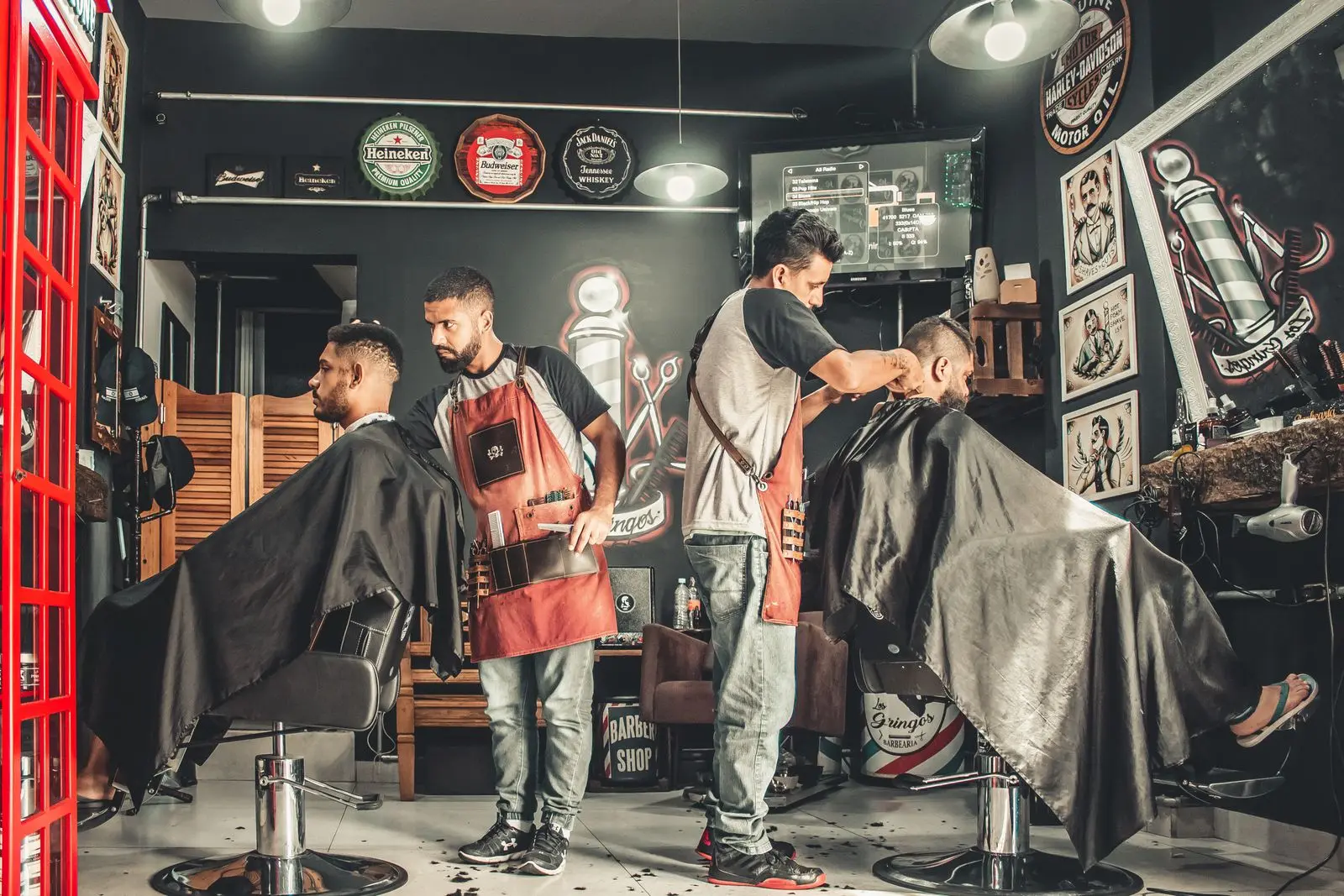
Nobody knew what the day had actually made
Ask a shop owner what yesterday earned and watch what happens. There is a pause, then a reconstruction: cash in the tin, a card machine receipt roll, a couple of transfers, a rough memory of who was in.
That is not a rounding error, it is running a business blind. If you do not know your daily takings, you certainly do not know which service actually makes money once you price the chair time properly. You do not know which barber rebooks their clients and which one is quietly losing them. You do not know that your Tuesdays have been dying for four months, because no number ever told you.
Every decision an owner wants to make — hire, raise prices, open longer, rent a fourth chair — depends on numbers the shop was never collecting. So decisions got made on instinct, and instinct is expensive.
“You cannot improve a number you have never been shown. Most shops were flying on feel.”
So why not just buy software?
This is the fair question, and Sami asked it properly. He did not set out to build a company. He set out to find something that worked. He tried the market instead, and the market is where the real argument for Reserveo came from.
The first category charges commission on every booking. Read that carefully: a percentage of a haircut, taken from a client who was already yours — a regular who has sat in your chair for six years and who found you because of your work, not because of a marketplace. You are paying rent on a relationship you built. Grow, and the bill grows with you, forever.
The second category is calendar-only. Clean, tidy, genuinely nice to use, and completely blind to walk-ins. It models a dentist, where everyone has an appointment. In a barbershop that means half your day happens outside your software, so your reports are wrong by construction.
The third category is POS-only. It takes payment well and does nothing else. It will not bring you a single new customer, it will not fill a Tuesday, it will not tell a man at the door how long the wait is. It is a till with a subscription.
The fourth is the one that should worry owners most: platforms that hold your client list and rent it back to you. Your clients' contact details, their history, their preferences — sitting inside somebody else's account. Try to leave and you find out who really owns the relationship. Some of them will happily market your regulars to the shop two streets away.
The fifth is software built for spas and clinics and retrofitted onto barbering. You can feel it immediately. "Practitioners" and "treatment rooms" and long intake forms, for a trade that runs on fifteen-minute turnarounds, a live queue, chair rental, and barbers who are personal brands with their own followings.
So what does a real shop end up doing? It uses all of them. A booking app, a card terminal, a spreadsheet, WhatsApp for the team, Instagram for everything else. Four or five tools, none of which talk to each other, all of which have to be reconciled by hand by a person who would rather be cutting hair.
“Paying commission on a client you already owned is not a growth cost. It is a tax on your own reputation.”
The decision to build
There is a moment where working around your tools costs more than replacing them. Sami hit it, and made a decision most people in his position do not make: stop patching, start building.
The reasoning was simple. Every product on the market solved one slice of a barbershop and assumed the rest was someone else's problem. But a shop is not slices. A walk-in becomes a client, a client becomes a booking, a booking becomes a payment, a payment becomes a number, and the number is how an owner decides anything. Break that chain into five apps and the chain stops being useful.
So Reserveo is built by a complete in-house team of IT engineers and working barbers. That combination is the entire point and it is unusual. Engineers alone build software that is elegant and wrong. Barbers alone describe the problem but not the system. Put them in the same team and every screen gets reviewed by somebody who has personally survived a Saturday rush with it.
It also means the vocabulary is right. Nobody on this product calls a barber a practitioner. Chair rental is a first-class concept, not a workaround. Walk-ins are not an edge case, they are half the business.
Booking and the live queue, in one app
The first thing Reserveo refuses to separate is appointments and walk-ins.
Clients book themselves. They open your shop page, see your real services and prices, pick the barber they actually want, choose from slots that are genuinely free, and confirm. No back-and-forth, no availability negotiation while you are mid-fade, no double-booked 2:15 because two people were writing in the same diary.
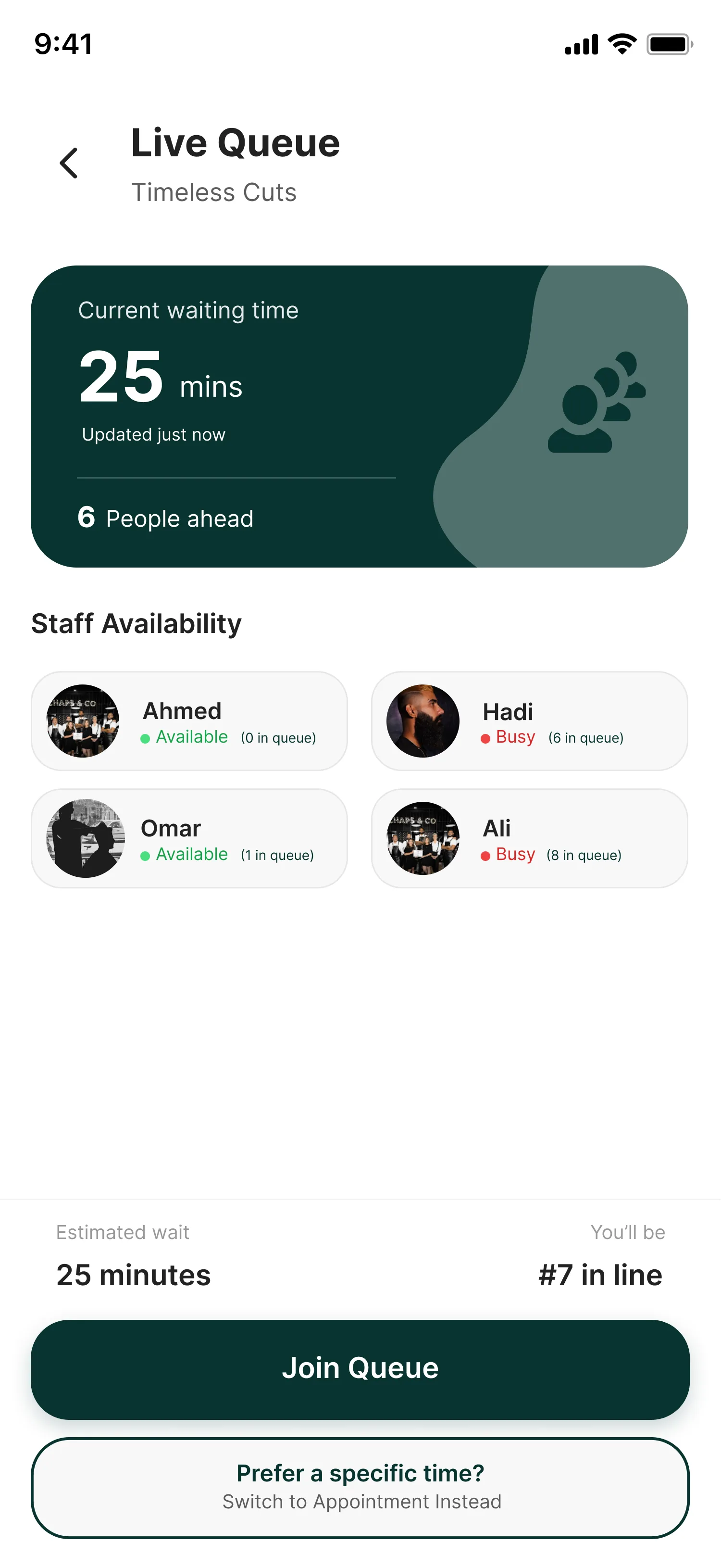
And on the same day, in the same app, there is a live walk-in queue. The man at the door does not have to be told a guess. He can see the current wait, how many people are ahead, and which barbers are free — then join the line and go get a coffee instead of standing by your window. On your side, pending walk-ins appear on the schedule to approve and check out, sitting alongside the appointments rather than in a separate universe.
That single decision fixes the leak nobody was measuring. Walk-ins stop being invisible traffic and become part of the day you can actually see, staff, and plan around.
The calendar, the team and the till
Behind the client-facing side is the part that decides whether a shop has a good week: the calendar, the staff, and the money at the counter.
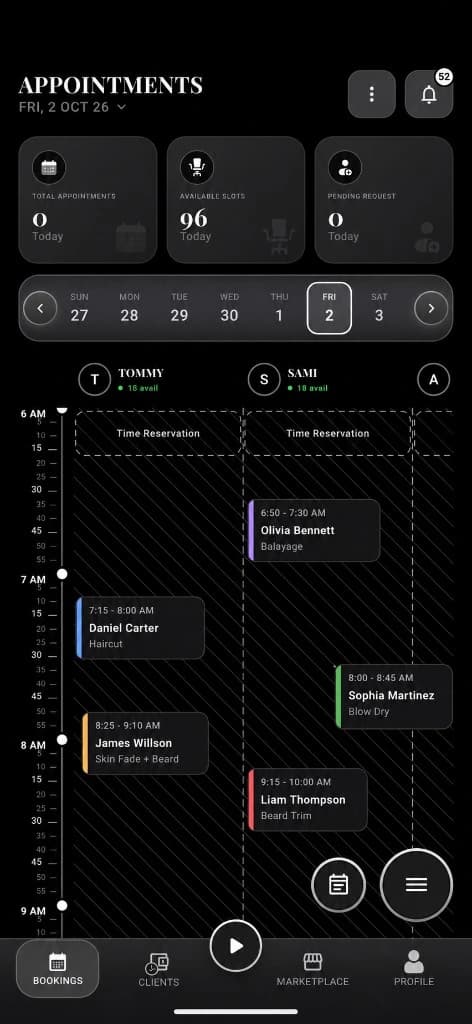
One schedule holds everything — appointments, approved walk-ins, and bookings an owner creates for a client who still prefers to phone. Every barber has their own hours, services and availability, so the calendar reflects how the shop is actually staffed rather than an idealised version of it.
Then checkout happens in the same place. A visit finishes, you take payment, and that transaction is already attached to the client, the barber and the service. Nothing to type twice, nothing to reconcile at midnight, no gap between what happened on the floor and what the system believes happened.
That is the difference between software that records a shop and software that runs one.
Your client list belongs to you
This one is philosophical as much as technical, and it is the line we are least willing to move on.
In Reserveo, the shop's clients are the shop's clients. Their visit history, their notes, what they had last time, which barber they trust, the fact they are always fifteen minutes late — that lives in your client CRM, attached to your business.
We are not a middleman renting your regulars back to you. A barber's client relationships are the most valuable thing they own, usually built over years of doing good work and remembering the small things. Software should hold that carefully, not hold it hostage.
Real numbers instead of a feeling
Because bookings, walk-ins and checkout all live in one system, an owner can finally be told the truth about their own business.
The finance hub is where that lands: income and expenses, savings and revenue goals, reports, forecasts and a tax estimate — scoped to the whole shop or narrowed down per barber. Not a mystery, not a shoebox of receipts, not a reconstruction on the last day of the month.
That is when the interesting questions become answerable. Which service is genuinely profitable once you count chair time? Which barber's clients keep coming back? Is Tuesday actually dead, or does it just feel dead? Should you open later on Thursdays, and by how much would that pay?
An owner with numbers makes different decisions than an owner with a feeling. Usually better ones, and usually earlier.
Organising a shop is not the same as growing one
Here is the thing every operations tool quietly ignores. Perfect organisation of the clients you already have does not add a single new client. A tidier calendar is still the same calendar.
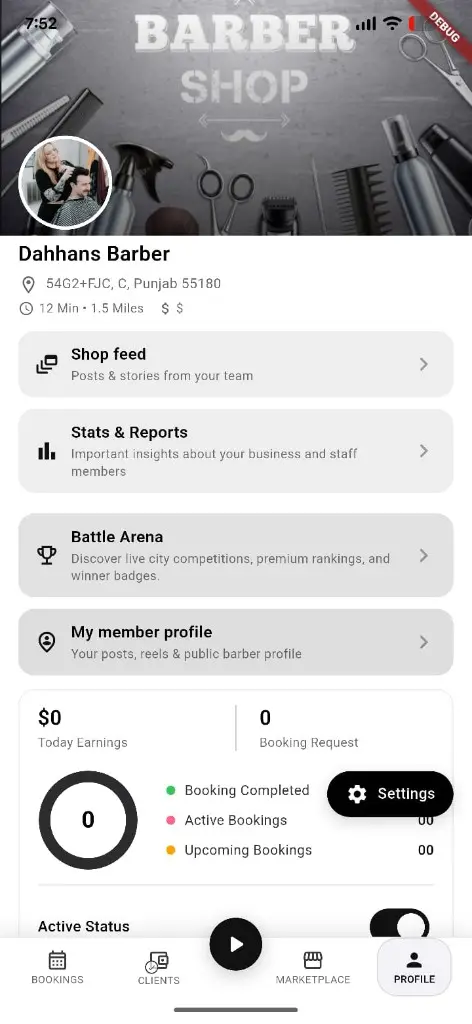
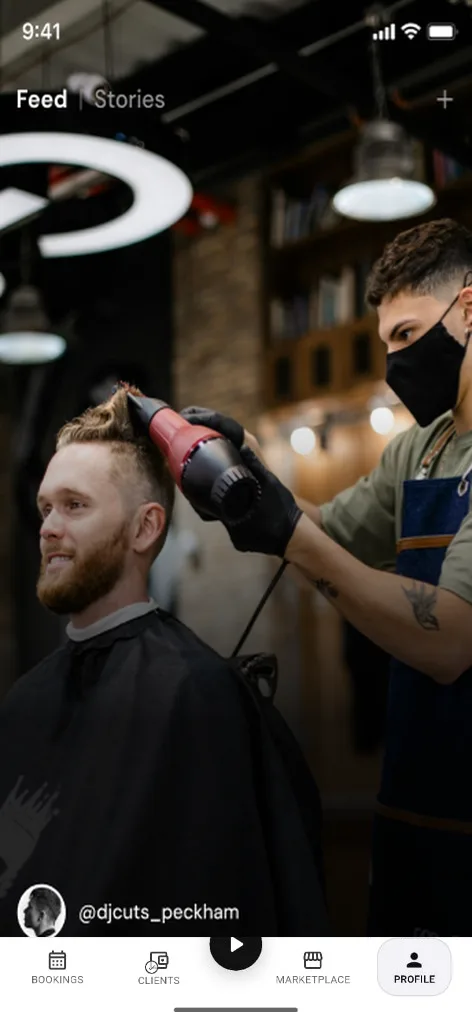
So Reserveo has a second half, and it is not decoration. There is a social feed where barbers post work, build a following, and get found by people who came for the content and left with a booking — because the book button is right there on the profile, not in a bio link three taps away.
There is Battle Arena, city-level competition for barbers: apply, upload your work, get shortlisted, win, appear on leaderboards. It exists because barbering is competitive and proud, and because winning something in your city brings people through your door in a way an advert never will.
There is a jobs board, so a shop that is growing can find a barber and a barber can find a better chair — full-time, part-time, chair rental or apprentice — inside the same app they already work in. And there is an equipment marketplace for the clippers, chairs and kit that currently get sold through group chats and luck.
Together that is the difference between a tool that manages your existing business and a platform that also feeds it. One asks you to be more organised. The other brings people in.
Who this is for
Reserveo is built for barbers and shop owners. That is a deliberately narrow answer.
If you rent one chair and you are your own front desk, it replaces the diary, the DMs and the guessing. If you run a shop with a team, it gives you one schedule, one client list, one checkout and one honest set of numbers instead of five apps and a spreadsheet.
Clients get a much better experience out of it — real availability, a wait time they can trust, their own booking history — but they are not who we designed for first. The trade is. Everything else follows from that.
What happens next
To be straight with you: the app is not on the App Store or Google Play yet. It is coming soon. If you want to be in early, get in touch through the contact page and we will bring your shop on.
When you do come on, barbers get the first three months free. Not a stripped-back trial tier — time to move your clients across, get your team using one schedule, and see what your own numbers look like before you decide anything.
That is the whole story. A barber spent eight years watching a trade get badly served by its own software, decided that working around it forever was not a plan, and built the thing he wanted with a team of engineers and barbers who know exactly what a Saturday feels like.
We would rather you judge it on the shop floor than in a brochure. Come and try it there.